 blog
blog
Multicultural Churches in Denver: Find Your Faith Community
Table of Contents
- What Makes a Multicultural Church in Denver Stand Out
- Diverse Churches in Denver: What to Expect
- Bilingual Church in Denver: Language and Accessibility
- Non-Denominational Church in Denver: Freedom and Flexibility
- Sunday Services, Worship Style, and What You'll Experience
- Planning Your First Visit: Practical Steps for Newcomers
- Building Real Connection: Small Groups and Community Beyond Sunday
- Frequently Asked Questions
Last Updated: October 14, 2026
What Makes a Multicultural Church in Denver Stand Out
A multicultural church Denver represents is a faith community where people from different ethnic backgrounds, cultures, and life experiences worship together as one body. At Hilltop City, diversity is central to who we are.
Many churches claim to be welcoming. A multicultural church proves it through intentional choices: who leads worship, whose stories get told, how decisions get made, and whether people from different backgrounds stay and build relationships.
Diverse Churches in Denver: What to Expect
Walking into a diverse church in Denver for the first time, you'll notice the faces: families from different continents, accents from around the world, and adults greeting each other like family.
Worship reflects this diversity: songs blend contemporary and traditional styles, prayers may include languages beyond English, and the message connects faith to real life, parenting, work, relationships, purpose.
At Hilltop City, the Word is practical. People come because they feel the presence of God and leave knowing how to live differently this week.
Small groups called City TRbes meet throughout the week, not just Bible studies, but spaces where people do life together. Young professionals, parents, entrepreneurs, and people exploring faith all belong.
Expect genuine welcome, not just polite greeting: people will ask real questions, remember your name, and invite you to serve alongside them.
Bilingual Church in Denver: Language and Accessibility
Language is one of the first things a visitor notices, and one of the hardest to confirm from a typical church homepage. Most sites say they are "multicultural" or "diverse" without stating which languages are spoken, in which service, and whether interpretation covers the sermon, the songs, or both.
Here is the practical framework for evaluating language support at any bilingual church in Denver.
Three common models, and what each one actually means for you:
- Separate language services. An English service and a Spanish service at different times, often on the same Sunday. You get a full service in your language, but the congregations may not overlap much during the week. Ask whether small groups are language-specific or mixed.
- One bilingual service. Both languages are used in the same gathering, songs may alternate, the message may be delivered in one language with live interpretation, or the preacher may move between both.
- Interpretation-supported service. The main service is in English, with Spanish interpretation through headsets, a designated seating area, or a separate room. This works if you want to worship alongside the whole congregation but need the message in another language.
Questions worth asking before you attend:
- Which specific languages are offered, and at which service times?
- Is interpretation available for the full service, or only the sermon?
- Are lyrics and sermon notes provided in more than one language?
- Do children's and youth programs operate in one language or several?
- Does language availability change for special events, holidays, or midweek gatherings?
Language offerings often vary by event. A Sunday service may be fully bilingual while a midweek small group is English-only, or the reverse. Confirming this in advance saves a disappointing first visit.
Accessibility goes beyond language. When you are comparing churches, these are the details that determine whether you can actually participate week after week:
- Childcare and children's programs. Is childcare available during the service, what ages does it cover, and is there a check-in process? Are volunteers background-checked?
- Disability access. Step-free entry, accessible restrooms, reserved wheelchair seating, and assistive listening devices. If you have specific needs, a quick call ahead is the most reliable way to confirm.
- Parking and transit. Whether there is a dedicated lot, how early it fills, and whether the location is reachable by bus or light rail. Denver's RTD system serves many neighborhoods, so a church near a rail or bus line is easier for people without a car.
- Service times that fit real schedules. Early, evening, and midweek options matter for shift workers, healthcare staff, and parents juggling weekend activities.
- Online options. Livestreamed or recorded services help people who are traveling, ill, or not yet ready to attend in person.
At Hilltop City, kids and youth ministries help children grow in faith while parents worship. Our website lays out where to park, where kids go, what to wear, and how long the service lasts, so you arrive knowing what to expect.
Accessibility is about removing the small obstacles that keep people from walking through the door, language, childcare, parking, seating, and clear information. The right church for you is the one where those obstacles have already been thought through.
Non-Denominational Church in Denver: Freedom and Flexibility
A non-denominational church in Denver doesn't answer to a larger organization or follow a specific tradition's rulebook. This creates both freedom and responsibility.
Freedom means the church can respond quickly to community needs, worship authentically, and make decisions based on what serves its people rather than a distant headquarters.
Responsibility means the church stands or falls on its own leadership. The pastor and team must earn trust through character, teaching, and commitment to their community.
Non-denominational churches emphasize the Bible as their foundation, focusing on core Christian beliefs rather than secondary issues that divide denominations.
At Hilltop City, we're Spirit-filled and Christ-centered. We focus on helping people discover God's purpose for their lives and equipping them to live it out with excellence.
This approach appeals to people returning to faith after years away, those exploring Christianity for the first time, and professionals who want practical wisdom.
Sunday Services, Worship Style, and What You'll Experience
Sunday worship at a multicultural church Denver feels different from the moment you walk in: energy and expectation, genuine warmth, and a shift toward presence, community, and purpose.
Contemporary worship uses modern instruments and songs; traditional worship honors hymns and liturgy. Many multicultural churches blend both because their congregation spans every generation and background.
The message connects faith to real life: how to handle conflict in your marriage, lead with integrity at work, raise kids with values, and find purpose when you're lost.
What makes it multicultural is who leads: diverse voices in the pulpit, music reflecting multiple traditions, prayers honoring different ways of speaking to God, and stories of struggle and redemption from people who look different but share your faith.
You'll experience worship that's alive, welcomed, not judged, with truth that challenges and grace that sustains.
Planning Your First Visit: Practical Steps for Newcomers
Visiting a new church takes more courage than most regular attenders remember.
The week before you go:
- Confirm the service time on the church's website, and check the date, holiday and summer schedules shift more often than people expect.
- Look up the address and plan your route. If you are using RTD, check whether the stop is a short walk and build in extra time.
- Read the "what to expect" or "plan a visit" page if one exists.
- If you have children, check the age ranges for kids' programming and whether check-in is required. Arriving with that sorted makes the first ten minutes far calmer.
What to wear. There is no dress code at most contemporary churches, including multicultural congregations. You'll see everything from jeans to business casual to a few suits.
When to arrive. Aim for 10 to 15 minutes early, enough time to park, find the entrance, check in kids, and get seated without rushing.
What happens during the service. A typical contemporary service runs about 75 to 90 minutes and generally follows this shape:
- Welcome and announcements, a few minutes of context about the life of the church.
- Worship through music, several songs, often a blend of current worship songs and older hymns.
- Message or sermon, typically 30 to 40 minutes, grounded in Scripture and applied to everyday life.
- Response and prayer, a closing time of prayer, sometimes with an opportunity to receive prayer from a team.
You are never required to stand, sing, give money, or speak. Participate as much or as little as you want.
After the service. This is what first-time visitors worry about most, and it's usually the easiest. Expect coffee, a welcome table, and people genuinely glad you came.
A realistic timeline for deciding. Some people know after one visit; many take three or four visits over a month or two. That's not indecision, it's how relationships form. The second visit is often the biggest step, because that's when you stop being a stranger.
At Hilltop City, we have two campuses: one in Denver and one in Fort Collins. Both serve the same mission with the same heart.
If you're still comparing options, visit two or three churches before settling.
Building Real Connection: Small Groups and Community Beyond Sunday
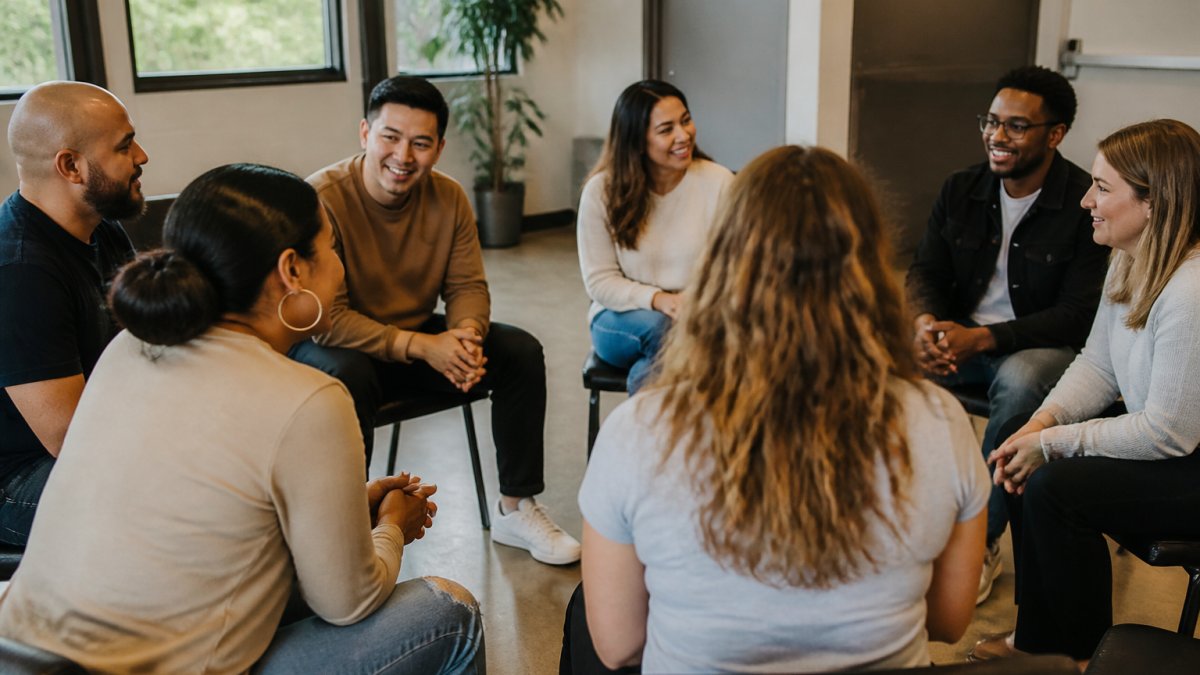
Worship on Sunday matters. But real transformation happens in community throughout the week.
Why small groups matter:
- You're known, not just present. Someone notices when you're missing and asks real questions about your life.
- You serve together. You don't just hear about helping others, you feed the homeless, mentor kids, or rebuild homes alongside your group.
- You grow in faith. You study Scripture with people who challenge and encourage you, seeing how faith works in real situations.
- You belong. You stop being a visitor and become part of a family.
Beyond TRbes, Hilltop City offers other ways to connect:
- Kids and youth ministries help your children grow in faith while you worship
- iLEAP equips entrepreneurs and professionals to lead with excellence in the marketplace
- Serving teams let you use your gifts to help others
- Mentoring relationships connect you with people further along the faith journey
The goal isn't to keep you busy. It's to help you discover and activate God's purpose for your life. Connected to community, you're stronger, accountable, and equipped.
Many people come to church alone and leave with a family. That's what multicultural churches do when they take diversity seriously: they create spaces where people from different worlds become brothers and sisters.
Finding the right faith community changes your life. A multicultural church in Denver offers belonging.
Frequently Asked Questions
What should I look for when visiting a multicultural church in Denver?
Look for genuine diversity in the congregation across age, ethnicity, and background—not just in leadership statements. Check whether the worship style and service times match your schedule. Ask about small groups and community programs. Visit the church's website or call ahead to confirm bilingual services if language matters to you. Most importantly, pay attention to how existing members greet visitors and whether you feel welcomed as a newcomer, not just tolerated.
How can I tell whether a multicultural church is genuinely welcoming to newcomers?
Welcoming churches have a clear visitor process—designated greeters, easy check-in, and follow-up within a week. They offer newcomer classes or one-on-one conversations to help you understand the community. Look for leadership that reflects the diversity they claim. Ask current members how long it took them to feel like they belonged. Be cautious of churches where diversity feels performative or where you sense cliques. Real welcome means you're invited into relationships, not just attendance.
What is the difference between a non-denominational church and other Christian churches?
Non-denominational churches are not affiliated with a specific denomination like Baptist, Methodist, or Catholic. They typically emphasize the Bible as their primary authority and focus on core Christian beliefs rather than specific doctrinal traditions. Non-denominational churches in Denver tend to attract people seeking a contemporary worship experience and practical teaching, making them accessible to people exploring faith or returning after time away.
Are there churches in Denver that offer bilingual or Spanish-language services?
Yes, many churches in Denver recognize the multicultural community and offer bilingual services or dedicated Spanish-language worship times. Some provide live interpretation during English services, while others hold separate Spanish services at different times. When searching for a bilingual church, check the website for service times listed in both languages, or call the church directly to confirm current language offerings. This ensures you can worship in the language most comfortable for you and your family.